
Respectful interactions are essential to safe care. Even seemingly minor incidents of rudeness, dismissiveness, or disrespect can affect teamwork, communication, staff well-being, and patient outcomes.
Health Quality Alberta’s Promoting Civility for Safer Patient Care toolkit provides guidance, tools, and resources to help healthcare organizations, leaders, educators, and staff foster respectful workplaces and address incivility when it occurs.

What is incivility?
For the purposes of this resource, incivility refers to behaviours that convey disrespect and negatively affect working relationships.
Why civility matters
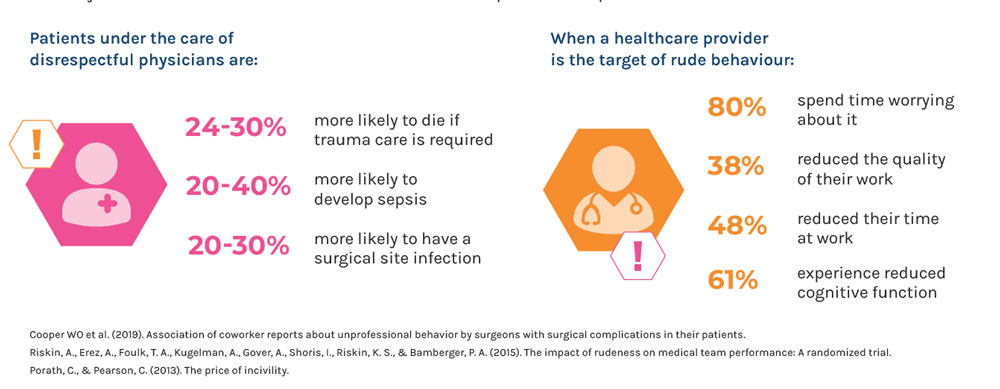
Incivility is a patient safety issue. When staff feel intimidated to speak up, they withdraw from engaging and collaborating with others, experience moral distress, and lose trust in the team and organization. This can lead to errors, harm or near harm to patients, neglect of care needs, complaints, and potentially worse clinical outcomes.
This toolkit focuses on three key areas for promoting civility

Set expectations
Create clear standards for respectful workplace behaviour through:
- Organizational values and leadership commitment.
- Codes of conduct (view Checklist for developing a code of conduct).
- Policies and procedures (view Tips for policies and procedures).
Prevent incivility
Create conditions that support respectful interactions through:
- Strategies for psychological safety for teams (view resources).
- Team and individual communication skills training.
- Conflict management and intervention education for leaders and managers.
- Programs to promote employee wellness (view resources).
- Organizational culture assessments (view Culture self-assessment for managers).
Respond to incivility
Address concerns early and consistently through:
- Standardized process for documenting, evaluating, and investigating reports.
- An intervention approach that emphasizes positive change and professional accountability.
- Resolution processes that consider both complainant and respondent.
Resources available in the toolkit include
- Supporting individual response checklist
- Personal documentation template
- Strategy for developing a response
- Checklist for preparing for a meeting
- Collection of sample phrases
An integrated approach for promoting civility
This toolkit recommends an integrated approach that incorporates actions at the individual, leadership, and organizational levels, recognizing that those at the organizational and leadership level will have the greatest impact. See the Organizational Self Assessment tool to learn about the components of an integrated approach.
Examples of organizations that use an integrated approach.