Portraits of Care
|
|
|

Adjust Reading Experience
Font Size
High Contrast
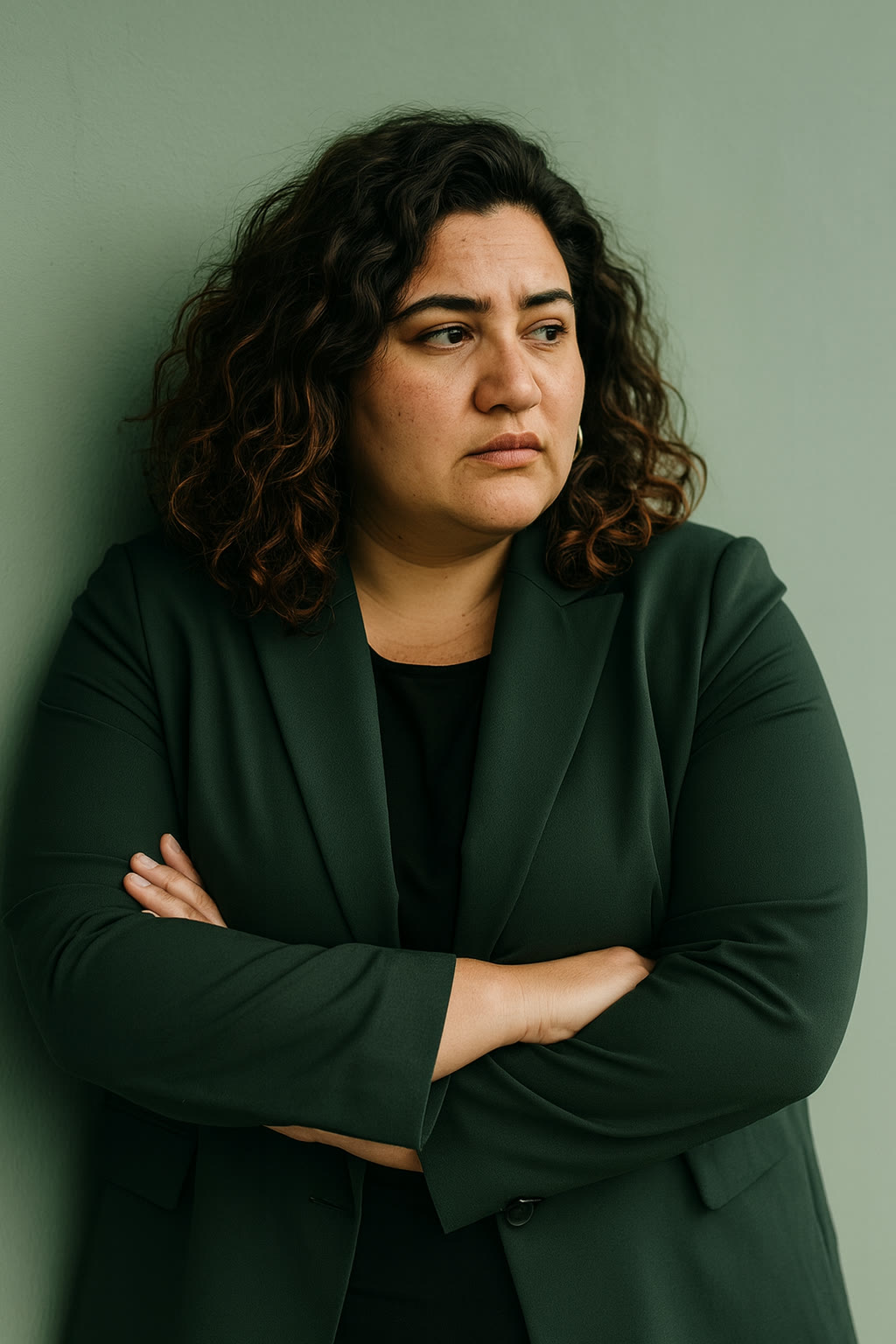
Experiencing Weight Stigma in Primary Care
“I just keep hoping that one day, someone will meet me with curiosity instead of judgment.”
View primary care patient experience ratings across Alberta →
This persona reflects experiences shared by patients who have encountered weight-related stigma in primary care. It does not represent all perspectives on weight, health, or care. Instead, it highlights patterns and insights from patient interviews, particularly related to communication in primary care.
Weight bias and stigma are well documented in healthcare. Patients in larger bodies often feel judged or dismissed, with concerns attributed solely to weight. As a result, deeper diagnostic or relational care may be delayed or denied. These patterns operate at both interpersonal and systemic levels.
Morgan’s experience supports reflection on:
This persona highlights key tensions that shape patient experience:
These dynamics shape trust, communication, diagnosis, care-seeking, and whether patients feel safe accessing care.
Throughout this persona, we intentionally avoid clinical terms such as obese or obesity, based on reflection and the understanding that:
Weight stigma and anti-fat bias are deeply embedded in society. Language alone will not undo this, but it can signal care, awareness, and openness to listen differently.
Since my previous doctor retired, I’ve seen a number of providers but I haven’t found one that truly gets me. I often leave feeling unheard and dismissed, as if my concerns don’t matter. Most providers seem more focused on my body size than on what I’m actually there to discuss. It’s hard to build trust when the weight stigma is constant.
My appointments are often routine, things like annual checkups or prescription renewals. I have a congenital chronic heart condition but that’s now in maintenance. Lately, I’ve struggled with multiple symptoms of high-grade inflammation, but it’s frustrating that no one seems to know the cause.
I often feel dismissed and disrespected in the healthcare system. Many primary care clinics seem built around weight, not wellness. The first thing they do is weigh you, even when it’s irrelevant, to why you’re there. When I refuse, I’m treated poorly. Doctors often assume every issue I have is caused by my size instead of listening or looking at evidence. Some admit they don’t even read current research. It’s exhausting having to advocate for myself just to be taken seriously. I leave appointments feeling unheard and worried about my future – especially about being denied care or surgery as I age. The system feels outdated, weight-centric, and unprepared to provide respectful, evidence-based care for larger people.
Listen to Morgan describe how they feel about their care.
I research evidence-based information so I can distinguish between weight-loss advice and true health recommendations. I plan how to frame questions and requests. I also prepare emotionally, knowing I may face anti-fat bias, and practice scripts to stay calm and assertive. I lean on online groups and peers for advice, and I bring notes to guide discussion.
Listen to Morgan describe how they prepare for appointments.
Listen to Morgan describe what they need from their healthcare team.
These questions are intended to encourage individual reflection on Morgan’s experience and identify opportunities to improve the quality of care for people with similar experiences.
The quality dimensions provide a common language for understanding quality as it should be experienced by people.
The questions that follow invite you to consider Morgan’s story through the interconnected dimensions of People-centred, Safe, and Equitable, while recognizing that other dimensions may also be relevant.
The wholistic preferences, needs, and strengths of people and communities matter.
Morgan has learned that healthcare conversations often begin with assumptions about body size before they have an opportunity to discuss their symptoms, concerns, or health goals. They come to appointments well-prepared, drawing on both their professional expertise as a health researcher and their lived experience, yet still worry that important concerns will be overlooked. Morgan hopes to be understood as a whole person, recognized as a knowledgeable partner, and included in decisions about their care.
What aspects of Morgan’s goals, strengths, and lived experience must be understood to support care that reflects what matters most to Morgan?
Trust and feelings of security are fostered, and all forms of preventable harm are avoided.
Morgan’s experiences with healthcare have changed how they approach future appointments. They prepare carefully, anticipate needing to advocate for themselves, and worry that assumptions about weight could influence access to investigations, treatments, or life-saving care. Morgan hopes for healthcare interactions that build trust, create a sense of safety, and respect their preferences and consent, allowing them to focus on their health rather than preparing to defend it.
How do Morgan’s experiences influence trust, feelings of safety, and their willingness to seek care?
Services see and respond to the preferences and needs of communities to reduce and prevent unfair differences in experiences and outcomes.
Morgan’s experiences suggest that body size can sometimes become the starting point for healthcare conversations, making it difficult for their symptoms and health concerns to be fully explored. Although they understand that weight may sometimes be clinically relevant, Morgan hopes for care that begins with curiosity, considers the full context of their health, and responds to their individual needs rather than assumptions.
What might care look like when Morgan’s symptoms, goals, and individual needs are explored without being overshadowed by assumptions about body size?
Are there other quality dimensions that are also relevant to Morgan’s experience?
The Alberta Quality Dimensions for Health are one part of the Framework for an Integrated People-centred Health System. The Framework also includes enablers, which create the conditions that support quality care, and shared responsibilities, which describe the actions everyone can take to contribute to high-quality, integrated people-centred care.
Explore the Framework to learn how the dimensions, enablers, and shared responsibilities work together to support high-quality, integrated people-centred care.
These questions invite you to consider how the insights gained through reflection and exploration could inform improvements within your own practice, team, organization, community, or the broader health system.
These resources build on the reflections and insights gained through this persona and support team discussion, quality improvement, and a deeper understanding of this topic.
Facilitate team learning: Continue the conversation with your team using the Persona Facilitation Guide: Open the Morgan chapter (future link page/pdf), which includes facilitation tips, discussion activities, and planning tools.
Support improvement: Learn how you can support providers using the personas for quality improvement with the Physician Practice Improvement Program (PPIP) fact sheet. Also, check out the following Health Quality Alberta resources:
Expand your knowledge: Explore additional clinical, community, and educational resources related to the topics explored through this persona.
These questions are intended to encourage reflection on Morgan’s experience and help make connections to your own experiences or those of someone you care about.
These resources build on the reflections and insights gained through this persona and provide additional information and resources related to this topic.
Find support:
Learn about: