Portraits of Care
|
|
|

Adjust Reading Experience
Font Size
High Contrast
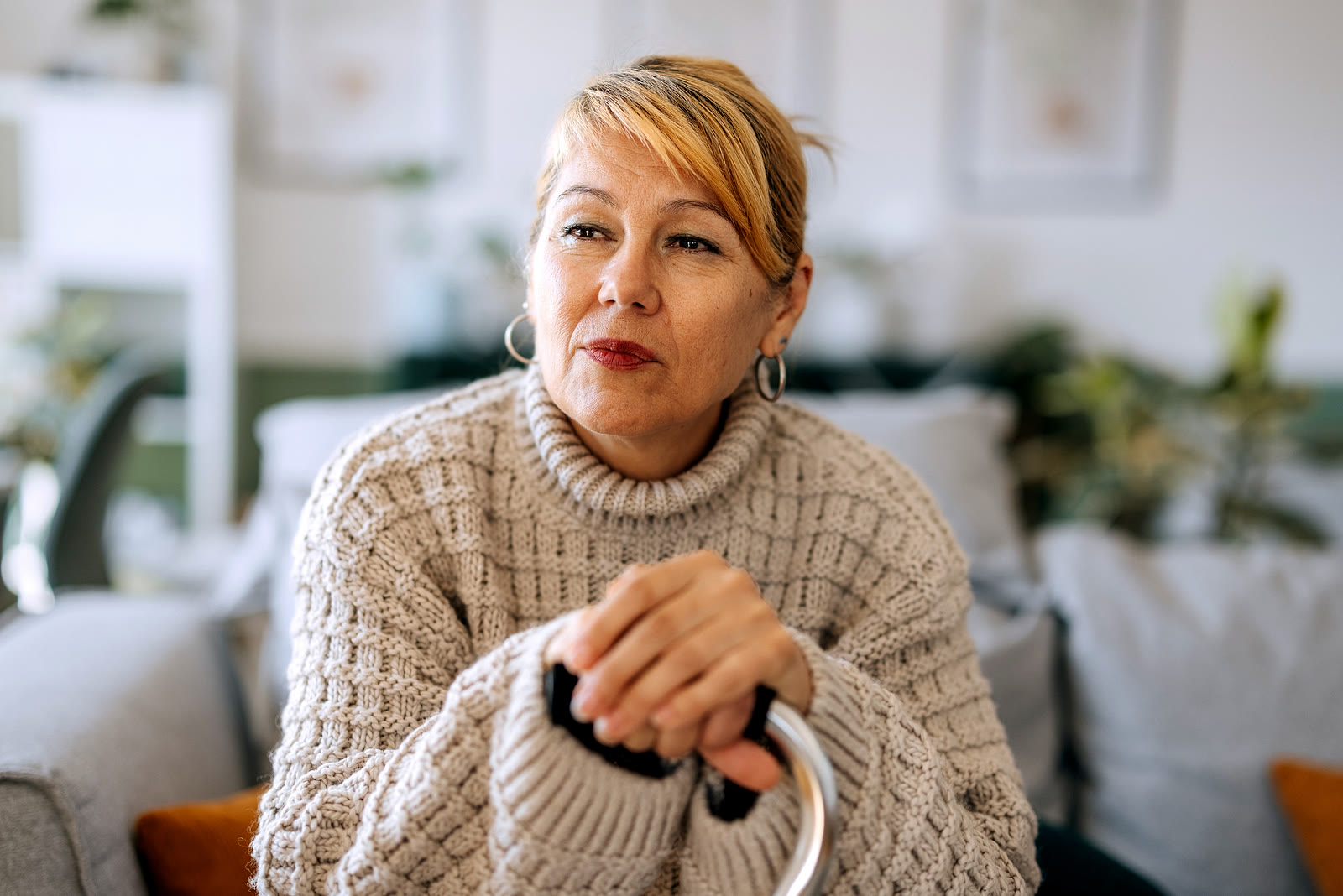
Navigating aging, disability, and health complexities
“As I get older, my health needs are more complex. It's never just one thing.”
View primary care patient experience ratings across Alberta →
This persona reflects experiences shared by patients whose health needs have become more complex over time due to aging, disability, and changing life circumstances. It does not represent all older adults, all people living with disability, or all individuals living outside urban centres. Instead, it highlights patterns and insights from patient interviews that illustrate the cumulative, contextual nature of complex care needs.
As people age, health needs often become layered and intersecting. Chronic conditions evolve, and symptoms may shift. What was once manageable may require more coordination and follow-up. Disability — whether longstanding or acquired — can affect mobility, employment, income, and daily routines, shaping how and when care is accessed and what is at stake in each appointment. This persona also considers the responsibilities of being both a patient and a caregiver. Supporting an adult child with health, disability, or mental health needs adds coordination, advocacy, and preparation obligations.
Financial realities further shape experience. Living on a fixed or disability-based income can limit flexibility: transportation, medications, time off work, and the emotional bandwidth required to navigate care all carry weight. These pressures are not always visible in clinical encounters. Living outside urban centres may involve longer travel, fewer provider options, or decisions about relocating. Moving may increase proximity, but does not guarantee continuity, fit, or trust.
Robin’s experience supports reflection on:
This persona highlights several important tensions:
These dynamics shape trust, care coordination, and whether patients feel safe raising complex needs.
This story shows a constellation of experiences, grounded in navigating care while aging, living with disability, and holding caregiving responsibilities all while facing financial and distance challenges.
I’ve had the same care team since moving here 10 years ago. Finding someone who would take me and my family was, and still is, hard. The relationship is adequate, but it’s not a good fit. The trust isn’t really there. I stay because I need care and the clinic is close. I can get seen in a reasonable amount of time, but I’m still looking for another provider.
As I get older, my health needs are more complex. It’s never just one thing. I have rheumatoid arthritis and live with a disability from an accident. It’s harder to get around now and I can’t work anymore. I rarely feel 100 per cent, so I manage what I can. I rely on my doctor for medications, monitoring, and referrals — especially when my conditions and symptoms change.
I thought moving closer to the city would get us better care, but that hasn’t been the case. My health has gone downhill in the last year, and my care experience is suffering too. Things have just gone awry. I rarely come in with just one issue, so it’s frustrating when visits are rushed. I have trepidation with each visit. I’m not normally an anxious person but I get the impression I’m wasting her time. She knows I’m physically disabled but she speaks to me like I have a cognitive impairment. I’m not sure if that’s age-related, but I expect to be treated with respect. I’ve lived a long life, managed a lot, and know my body well. I understand she’s in a difficult situation, but I’m depending on her. If she misses something, that’s my life. She’s supposed to be there to help me manage my health. I’m on board with being one half of the team, I just can’t do it all on my own.
Listen to Robin describe how they feel about their care.
I prepare carefully for every appointment. I make detailed lists so I can cover everything I need to say, since appointments can feel rushed and one-sided. I bring medication names and dosages, lab timelines, and written notes. I also coordinate travel, pharmacies, and medical records for myself and my family. It’s very stressful but over time I’ve learned that being organized and informed matters — because if you don’t push and advocate for yourself, things can easily fall through the cracks.
Listen to Robin describe how they prepare for appointments.
Listen to Robin describe what they need from their healthcare team.
These questions are intended to encourage individual reflection on Robin’s experience and identify opportunities to improve the quality of care for people with similar experiences.
The quality dimensions provide a common language for understanding quality as it should be experienced by people.
The questions that follow invite you to consider Robin’s story through the interconnected dimensions of People-centred, Accessible and timely, and Safe, while recognizing that other dimensions may also be relevant.
The wholistic preferences, needs, and strengths of people and communities matter.
Robin is living with evolving health needs as they age, alongside a physical disability, financial constraints, and caregiving responsibilities. Together, these interconnected experiences shape how they navigate healthcare. They prepare carefully for appointments, actively participate in managing their health, and work hard to communicate the full picture, yet often feel there isn’t enough time or continuity for their history and the complexity of their life and health to be fully understood. Robin hopes to be recognized as a capable partner whose priorities, strengths, and experiences are considered alongside their medical needs.
What aspects of Robin’s responsibilities, strengths, and evolving health needs must be understood to support care that reflects what matters most to Robin?
People can readily access services that meet their needs.
Robin carefully plans appointments, tests, prescriptions, and travel to make the most of each healthcare interaction. Although living closer to the city has improved proximity to services, Robin’s experience shows that access involves more than location or getting an appointment. Care truly meets Robin’s needs and preferences when care teams have time to address multiple concerns, provide clear follow-up, maintain continuity of care, and recognize the realities of managing evolving health needs.
Based on Robin’s experience, what would help them receive the care they need when they need it?
Trust and feelings of security are fostered, and all forms of preventable harm are avoided.
Robin describes a growing sense of uncertainty as missed follow-up, rushed appointments, and fragmented communication accumulate over time. Although they understand the pressures facing healthcare providers, these experiences leave them questioning whether important concerns are being seen, understood, and followed through. Robin hopes for healthcare interactions that build trust, create a sense of safety, and help them feel like they are part of a team rather than carrying responsibility for managing their care alone.
How do Robin’s experiences influence trust, feelings of safety, and confidence their care will be coordinated and followed through?
Are there other quality dimensions that are also relevant to Robin’s experience?
The Alberta Quality Dimensions for Health are one part of the Framework for an Integrated People-centred Health System. The Framework also includes enablers, which create the conditions that support quality care, and shared responsibilities, which describe the actions everyone can take to contribute to high-quality, integrated people-centred care.
Explore the Framework to learn how the dimensions, enablers, and shared responsibilities work together to support high-quality, integrated people-centred care.
These questions invite you to consider how the insights gained through reflection and exploration could inform improvements within your own practice, team, organization, community, or the broader health system.
These resources build on the reflections and insights gained through this persona and support team discussion, quality improvement, and a deeper understanding of this topic.
Facilitate team learning: Continue the conversation with your team using the Persona Facilitation Guide: Open the Robin chapter (future link page/pdf), which includes facilitation tips, discussion activities, and planning tools.
Support improvement: Learn how you can support providers using the personas for quality improvement with the Physician Practice Improvement Program (PPIP) fact sheet. Also, check out the following Health Quality Alberta resources:
Expand your knowledge: Explore additional clinical, community, and educational resources related to the topics explored through this persona.
These questions are intended to encourage reflection on Robin’s experience and help make connections to your own experiences or those of someone you care about.
These resources build on the reflections and insights gained through this persona and provide additional information and resources related to this topic.
Find support:
Learn about: