Portraits of Care
|
|
|

Adjust Reading Experience
Font Size
High Contrast
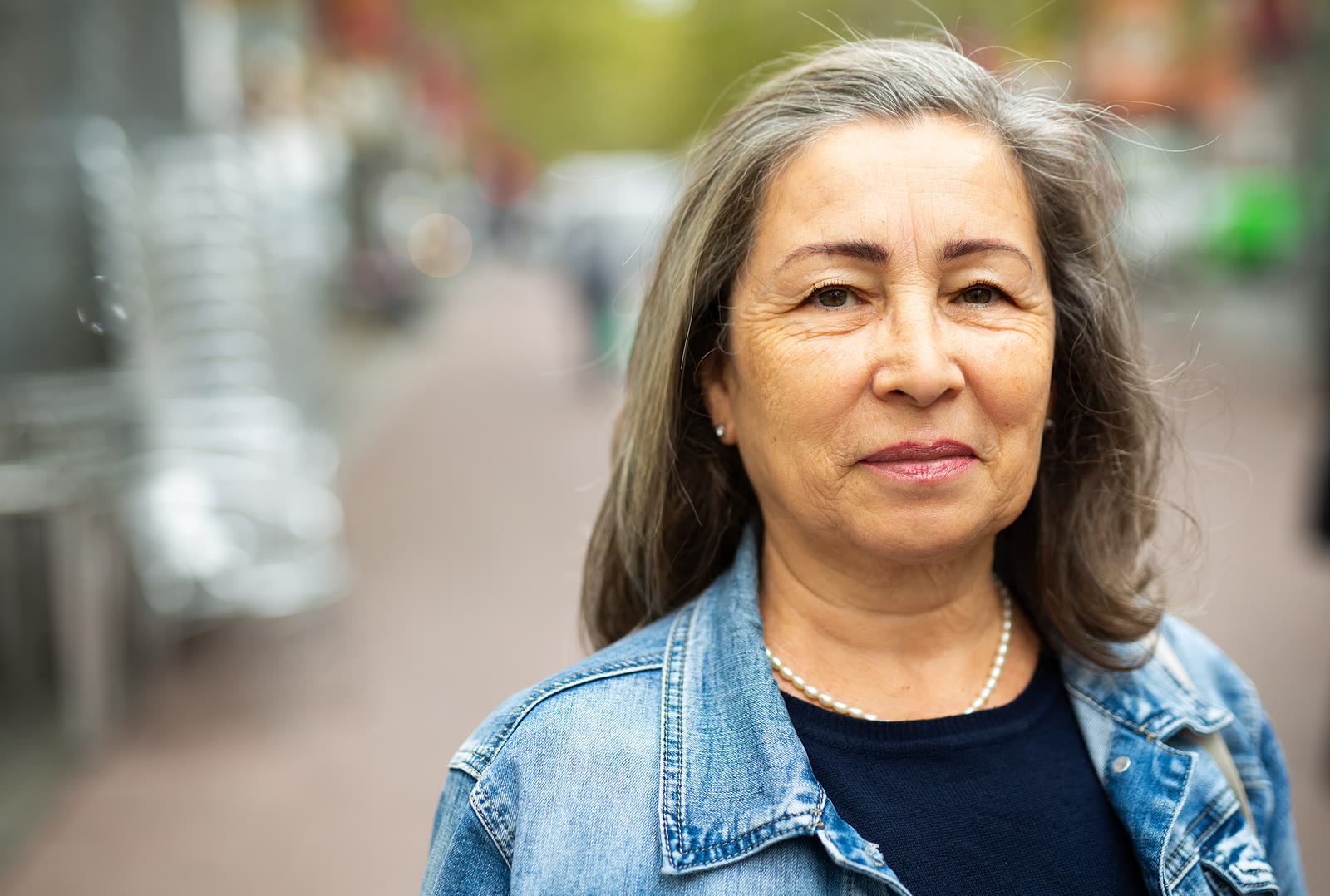
Seeking Integrated, Safe & Accessible Care
“I know it’s a lot. I do… But if I could ask for anything… it’d be to just make this a bit easier on me.”
View primary care patient experience ratings across Alberta →
Before engaging with this persona, we invite you to pause and consider the context that shapes this experience.
Read before continuing ›This persona reflects experiences of patients navigating rural and regional health systems while living with complex, chronic conditions. It also highlights how identity, family history, and lived experience shape care access and communication. Terry does not represent a single individual, community, or Nation. Instead, it draws on patterns and insights from patient interviews, grounded primarily in one experience and supported by others.
Before engaging, consider where identity, experience, and care meet. Terry’s story reflects a complex relationship to identity, ancestry, and history — what is known, uncertain, or not always safe to share. These dynamics are shaped by colonial systems, systemic inequities, and differential treatment in healthcare. Identity may be visible or misunderstood; at other times, it is shared selectively based on safety and trust. These decisions are shaped by prior experience and are central to care.
Terry’s experience reflects what can happen when care becomes fragmented, inconsistent, or difficult to access — particularly in rural contexts where geography, weather, and limited provider availability shape every aspect of care. Travel is not simply an inconvenience; it is a financial, physical, and emotional burden that must be navigated repeatedly to access testing, follow-up, and specialist care.
Without stable primary care, Terry coordinates services across providers, locations, and systems — managing appointments, tracking results, advocating for follow-up, and ensuring information is shared. This labour is essential to prevent gaps, delays, or harm.
Past experiences of being rushed, dismissed, or treated harshly shape how patients enter future encounters. Appointments are not neutral — they require preparation, vigilance, and emotional labour. Patients may carefully consider what to share and whether it will be received with respect.
This persona supports reflection on:
This persona highlights several important tensions:
Terry’s story reflects the complexity of navigating care while holding multiple, sometimes uncertain, relationships to identity, family history, and community. These dynamics are shaped by histories of colonialism, systemic racism, and inequitable access, influencing safety, recognition, and trust.
This persona does not represent any one Indigenous experience. It invites reflection on how identity — visible, hidden, or evolving — interacts with care in ways that are often unspoken but deeply felt. This story represents one constellation of experiences navigating care across distance, complexity, and constraint.
Over the years, I’ve picked up a few things — breast cancer, diabetes, osteoporosis — and some long-term complications from treatment that didn’t go as planned. I’m still managing nerve damage from the radiation. So there’s a lot of hands in my file, you know — lots of appointments, specialists, tests, medications, and follow-ups to keep track of, and then other things that come up — like I got bitten by a dog a little while ago too. Some people have hobbies — mine seems to be appointments.
I did have a family doc, but I kinda stopped going unless I really had to — between taking care of mom and never knowing what I was gonna get from him, it just didn’t feel worth it. It was always rushed, and he’d yell, boy did he yell. I was just about out of my mind. A lot of things got missed and he’d change stuff on me – like what about the plan we had? Is anyone really keeping track? I actually found out I had breast cancer from the report online, not from him – like holy crow! I probably stayed longer than I should’ve but there’s not a lot of options out here…they always leave. I went without a regular doc for a while after that, but I’ve got this nurse practitioner now, and she’s good at keeping things connected for me.
These days, I’ve got a bit of a mix of people when it comes to care — not just one doctor. My surgeon told me straight up, “Find your own people, get the right people,” and he helped me get connected to a specialist a little closer to home who actually took the time and picked things up right away — ordered all the tests, explained everything, didn’t rush me. And my nurse practitioner keeps things moving, pulls in doctors when she needs to — she’s really good. I’m not insecure about not having a regular doctor anymore — I think I get better service. The pharmacist’s been a big help too — making sure I can actually afford what I need and even delivering it on weekends. So yeah, there’s a few of them now… but I’m still the one keeping track of it all.
Getting to an appointment is half the battle, honestly. There’s a lot of driving to different towns or into the city — sometimes even in the same day. It gets kinda crazy. And in the winter, it’s the worst. Not to mention expensive — gas, insurance, keeping the car running… it all adds up. If I didn’t have a vehicle, I wouldn’t be going anywhere. I call it my “medical tourism.” I do a lot of the work ahead of time too — keeping track of my tests, medications, appointments, making sure I’ve got my questions ready — because if I don’t, things get missed. You don’t always get much time either, so you gotta come in prepared and try to guide things a bit. And then there’s my mom — she’s in her 90s, hey — so I’m helping her with her appointments, groceries, checking in. Sometimes my stuff has to wait, even if they’re not too happy about that. It helps I’ve got patience and a good sense of humour, you know.
Listen to Terry describe how they prepare for appointments.
Audio placeholder — a recorded narration of Terry’s story for accessibility and engagement purposes.
For a long time, things have been pretty shaky. I’ve had care that felt rough — rushed, dismissive, even aggressive — and after enough of that you start going in with your guard up. Sometimes I’m tired before the appointment even starts – thinking about what to say, what not to say, and whether they’re actually gonna hear me. When it comes to who I am – my identity, my family, and all the history you know – I don’t fully know all that myself. Makes you wonder if you should tell them because of the genetic component in there, but there’s also no time or safety. We get treated differently. I see it all the time. It’s gotten better with the team I have now. I feel more looked after and believed, like someone’s actually paying attention. I still wouldn’t call it easy though. So yeah, there is more trust now — but I had to build it carefully. It’s not something I just hand over anymore.
Listen to Terry describe how they feel about their care.
Audio placeholder — a recorded narration of Terry’s story for accessibility and engagement purposes.
Listen to Terry describe what they need from their healthcare team.
Audio placeholder — a recorded narration of Terry’s story for accessibility and engagement purposes.
These questions are intended to encourage individual reflection on Terry’s experience and identify opportunities to improve the quality of care for people with similar experiences.
The quality dimensions provide a common language for understanding quality as it should be experienced by people.
The questions that follow invite you to consider Terry’s story through the interconnected dimensions of People-centred, Safe, and Integrated, while recognizing that other dimensions may also be relevant.
The wholistic preferences, needs, and strengths of people and communities matter.
Terry is living with multiple chronic health conditions while balancing caregiving responsibilities and navigating care across providers, communities, and healthcare settings. They carefully prepare for appointments, track tests and medications, advocate for follow-up, and work to ensure nothing gets missed. By the time they arrive, they have already invested significant time and effort into preparing for the visit. Terry hopes to work with their healthcare team to make decisions that reflect the whole picture of their life, recognizing that care needs to fit alongside their responsibilities, priorities, and goals – not just the health conditions they are managing.
What aspects of Terry’s identity, responsibilities, and evolving health needs must be understood to support care that reflects what matters most to Terry?
Trust and feelings of security are fostered, and all forms of preventable harm are avoided.
Terry describes entering appointments with caution after experiences of being rushed, dismissed, and treated differently. Decisions about what to share—including family history, identity, symptoms, and concerns—are shaped by whether the interaction feels respectful, safe, and worth the vulnerability it requires. Although Terry has developed trusting relationships with members of their current care team, trust remains something that is built over time through listening, follow-through, and consistent communication. Terry hopes healthcare interactions create enough time and space to share what matters without feeling rushed or like they are asking for too much.
How do Terry’s experiences influence trust, feelings of safety, and decisions about what to share during healthcare interactions?
People, teams, sectors, organizations, and communities are interconnected.
Terry’s healthcare experience spans multiple providers, communities, and healthcare settings. Although each provider contributes an important piece of Terry’s care, Terry is often left connecting those pieces — tracking appointments, following up on results, sharing information between providers, and reconciling recommendations. Geography, travel, weather, caregiving responsibilities, and the financial, time, and emotional demands of multiple appointments, medications, and tests add further complexity. Terry needs care that recognizes these cumulative burdens and feels connected and coordinated, rather than care that relies on an individual to hold everything together alone.
What opportunities exist to reduce the coordination work Terry carries and create a more connected experience of care?
Are there other quality dimensions that are also relevant to Terry’s experience?
The Alberta Quality Dimensions for Health are one part of the Framework for an Integrated People-centred Health System. The Framework also includes enablers, which create the conditions that support quality care, and shared responsibilities, which describe the actions everyone can take to contribute to high-quality, integrated people-centred care.
Explore the Framework to learn how the dimensions, enablers, and shared responsibilities work together to support high-quality, integrated people-centred care.
These questions invite you to consider how the insights gained through reflection and exploration could inform improvements within your own practice, team, organization, community, or the broader health system.
These resources build on the reflections and insights gained through this persona and support team discussion, quality improvement, and a deeper understanding of this topic.
Facilitate team learning: Continue the conversation with your team using the Persona Facilitation Guide: Open the Terry chapter (future link page/pdf), which includes facilitation tips, discussion activities, and planning tools.
Support improvement: Learn how you can support providers using the personas for quality improvement with the Physician Practice Improvement Program (PPIP) fact sheet. Also, check out the following Health Quality Alberta resources:
Expand your knowledge: Explore additional clinical, community, and educational resources related to the topics explored through this persona.
These questions are intended to encourage reflection on Terry’s experience and help make connections to your own experiences or those of someone you care about.
These resources build on the reflections and insights gained through this persona and provide additional information and resources related to this topic.
Find support:
Learn about: